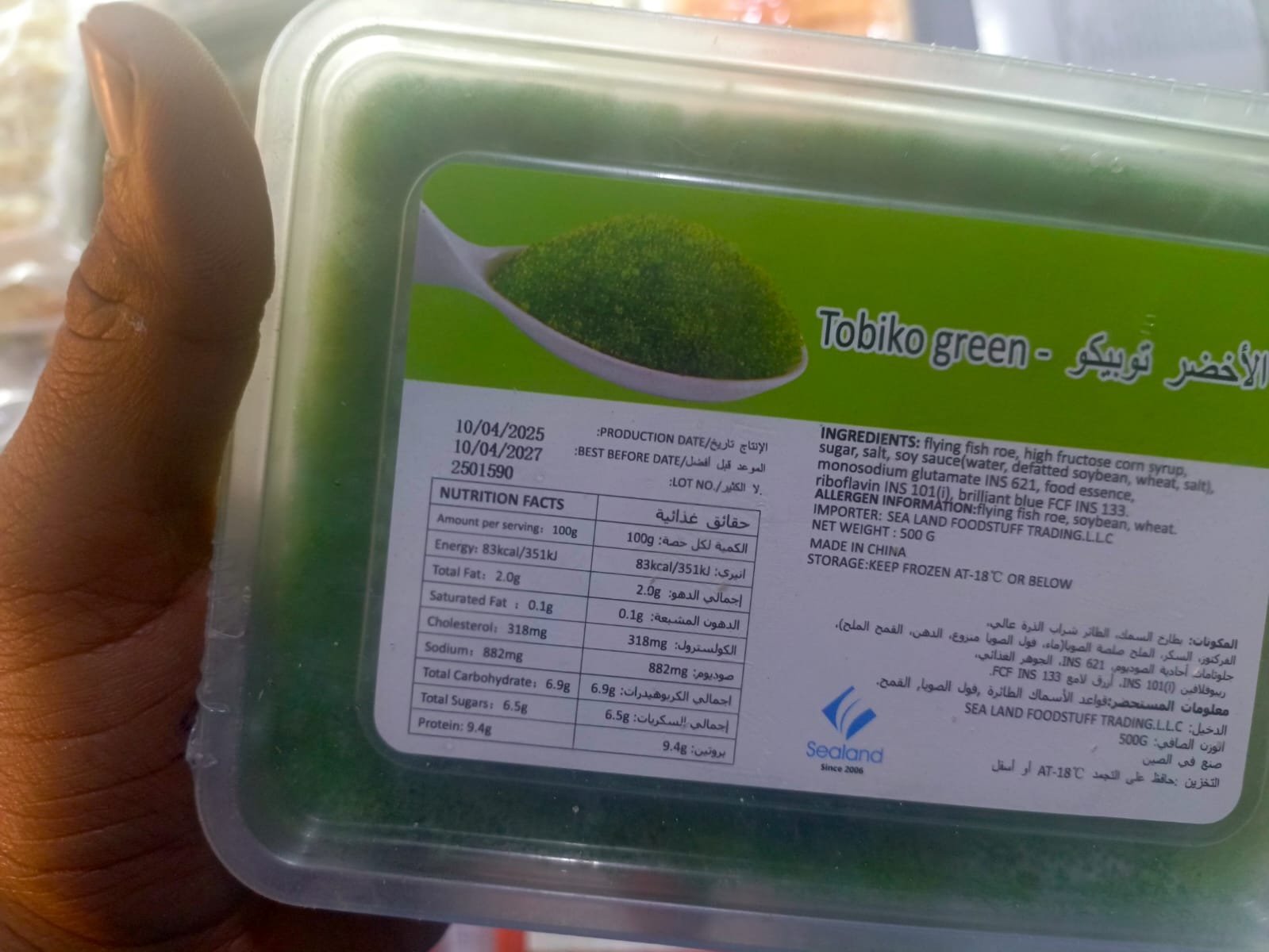
Buy Fresh Green Tobiko (Green Flying Fish Roe) Online in Dubai, UAE
33 people are viewing this product right now
🔥 8 items sold in last 3 hours
Green Tobiko is a vibrant flying fish roe with tiny, firm pearls, a satisfying pop and a mild wasabi finish. Starting from AED 60 per 500g, it is available in 500g and 1kg packs for Dubai, Jumeirah, Abu Dhabi, Sharjah and Ajman. Dior Fresh Fish delivers it chilled at 0–4°C, with halal-compliant handling and seafood experience since 2018.
Made for sushi, sashimi-style presentation, seafood platters and modern appetisers, Green Tobiko brings colour and texture without lengthy preparation. The roe is sourced from flying fish supply chains associated with the Pacific and Indian Oceans and arrives ready to serve. Order online for convenient Dubai delivery, with insulated packaging designed to protect delicate roe during UAE summer conditions.
Variant Display
| Variant | Price |
| 500g Green Tobiko | AED 60 |
| 1kg Green Tobiko | AED 120 |
| Restaurant / Wholesale Quantity | Contact for current availability |
The current Dior Fresh Fish product listing states Green Tobiko starts from AED 120 per 1kg; the 500g figure above represents the corresponding half-kilogram variant. Confirm live checkout pricing before publishing if your store variant differs.
Product Identity & Origin
Green Tobiko is the processed roe of flying fish, recognised for its small, separate pearls, crisp popping texture and distinctive green appearance. Dior Fresh Fish identifies its product with Cheilopogon agoo, a flying-fish species in the Exocoetidae family, associated with temperate and tropical Pacific and Indian Ocean waters and FAO Areas 61 and 71. The roe is naturally pale and receives wasabi-based flavouring for its characteristic colour and mild heat.
Unlike whole fish, Tobiko has no bones, eyes, gills or skin to assess at the point of serving. For incoming seafood inspection, quality teams should assess packaging integrity, temperature, appearance, odour and pearl separation. Good Tobiko should have distinct pearls rather than a sticky, collapsed mass. Its crisp bite makes it especially useful as a finishing ingredient rather than a main protein.
Although Tobiko originated in Japanese cuisine, it fits naturally into Dubai’s contemporary seafood culture. It can garnish sushi rolls, sashimi plates, chilled seafood, seafood salads and fusion appetisers. For UAE entertaining, it can also be placed over labneh, Arabic bread or small appetiser portions for a Friday family gathering.
Why Buy Green Tobiko from Dior Fresh Fish?
Halal-Compliant & Hygienically Processed
Dior Fresh Fish states that its Green Tobiko is handled under halal guidelines and processed through HACCP-oriented food-safety controls. The product page also states that flavouring and colouring components are selected to meet applicable UAE requirements. Packaging, temperature and product condition are checked before dispatch to help protect the delicate roe.
Sourced from Pacific and Indian Ocean Supply Chains
Green Tobiko comes from flying fish roe, with the listed species associated with Pacific and Indian Ocean waters. The product information identifies FAO Areas 61 and 71 and describes sourcing through specialised fisheries. Exact harvest location can vary by batch, so the supplier documentation should be used for final traceability.
Cold-Chain Delivery (0–4°C)
Dior Fresh Fish states that Green Tobiko is maintained at approximately 0–4°C during delivery. Insulated thermal packaging and gel ice packs help protect the roe from Dubai’s summer heat, reducing exposure to temperature fluctuations while preserving its delicate texture.
Trusted Since 2018
Dior Fresh Fish has operated in the UAE seafood market since 2018, serving customers in Dubai, Abu Dhabi, Sharjah and Ajman. Its seafood operation combines chilled logistics, hygienic packing and online ordering, making Green Tobiko practical for both home sushi preparation and professional kitchen purchasing.
How to Serve Green Tobiko
Sushi & California Roll Garnish
Preparation time: 0 minutes
Serving temperature: 0–4°C
Seasoning: Soy sauce, wasabi and pickled ginger
Serving suggestion: Add a thin layer over sushi rolls immediately before serving.
Keep the Tobiko chilled and spoon it directly onto prepared sushi. Avoid heating it because excessive heat can reduce the characteristic popping texture. This is the simplest preparation for a domestic helper: open, portion and garnish immediately before the meal.
Chilled Seafood Platter
Preparation time: 5 minutes
Serving temperature: 0–4°C
Seasoning: Lemon, cucumber, dill and light soy dressing
Serving suggestion: Place small spoonfuls beside prawns, tuna or chilled seafood.
Prepare the seafood platter first and add Green Tobiko at the end. Its salty, lightly spicy profile provides contrast against mild seafood. For a UAE gathering, serve it alongside chilled prawns and salads as a modern appetiser.
Labneh & Arabic Bread Canapés
Preparation time: 5–10 minutes
Serving temperature: Chilled
Seasoning: Labneh, lemon zest, black pepper and fresh dill
Serving suggestion: Spread labneh over small pieces of Arabic bread and finish with Tobiko.
No cooking is required. Prepare the bread and labneh, then add the roe just before serving. This creates an easy Friday family appetiser with a Japanese ingredient adapted to a familiar UAE-style table.
Green Tobiko vs Other Popular UAE Seafood
| Feature | Green Tobiko | Fresh Yellowfin Tuna | Fresh Salmon |
| Texture | Small, firm popping pearls | Dense and meaty | Soft and buttery |
| Flavour | Salty with mild wasabi heat | Clean and rich | Rich, oily and slightly sweet |
| Bones | None | Very few in prepared cuts | Minimal in fillets |
| Best Use | Sushi, garnish, appetisers | Sushi, searing, grilling | Sushi, baking, grilling |
| Price Position | Mid-range specialty ingredient | Premium | Premium |
.
Who Should Eat and Avoid Green Tobiko?
Families: Green Tobiko can add flavour and visual appeal to family sushi plates while supplying protein, selenium and vitamin B12. Because it is salty and usually eaten as a garnish, portions are naturally smaller than a normal fish serving.
Fitness audience: With approximately 22g protein per 100g in the product’s reference nutrition profile, Tobiko can contribute protein while adding very little carbohydrate. Actual serving sizes are normally much smaller than 100g.
Heart-health: EPA and DHA contribute marine omega-3 fats, although the product’s sodium content means people managing blood pressure should keep portions moderate.
Elderly: Vitamin B12 and selenium contribute to normal nutritional needs, while the absence of bones makes Tobiko convenient as a garnish. People with swallowing difficulties should still choose soft, appropriate foods according to individual needs.
Keto/low-carb: Green Tobiko contains approximately 1g carbohydrate per 100g in the listed nutrition profile, making it compatible with many low-carbohydrate meal plans.
Who should avoid or limit it: Anyone with a fish or seafood allergy should avoid Green Tobiko. People monitoring sodium intake should also keep portions controlled because processed roe can contain significant salt.
Nutrition
All nutritional values are approximate and based on a 100g raw edible portion.
|
Nutrient |
Approximate Amount |
|
Calories |
140 kcal |
|
Protein |
22 g |
|
Total Fat |
6 g |
|
Omega-3 (EPA/DHA) |
1.5 g |
|
Vitamin D |
10 mcg |
|
Vitamin B12 |
12 mcg |
|
Selenium |
40 mcg |
|
Iodine |
60 mcg |
|
Phosphorus |
300 mg |
|
Potassium |
220 mg |
|
Carbohydrates |
1 g |
These figures reflect the nutrition values published on the current Green Tobiko product page. Because Tobiko is processed roe and recipes, seasoning and preparation can affect the final nutrition profile, the product label should take priority for exact batch-specific values.
Protein Comparison
Green Tobiko provides approximately 22g of protein per 100g, compared with roughly 23g for cooked chicken breast and around 18g for many lamb cuts. Salmon can provide a similar amount of protein but generally contains substantially more total fat. Tobiko is normally eaten in small portions, so its practical protein contribution per meal is lower than a full fish fillet.
Nutritional Benefits
Green Tobiko supplies protein, marine omega-3 fatty acids, vitamin B12, selenium, iodine and phosphorus. EPA and DHA contribute to overall dietary omega-3 intake, while vitamin B12 supports normal neurological and blood-cell functions. Selenium contributes to normal antioxidants and thyroid function.
Precautions
Green Tobiko is a fish product and can trigger reactions in people with fish allergies. Its sodium content also makes portion control sensible for people following sodium-restricted diets.
Flying fish are relatively small species and are generally considered low on the food chain, so mercury exposure is expected to be lower than in large predatory tuna or swordfish; however, exact mercury levels depend on the species and harvest location.
For most healthy adults, Tobiko is best treated as a garnish or occasional seafood ingredient rather than a primary weekly fish serving. Pregnant consumers should use commercially prepared, properly chilled roe and follow current food-safety guidance, particularly if consuming it in raw-style sushi preparations.
Delivery & Returns
Delivery Information
Orders placed before 12 PM can qualify for same-day delivery in Dubai, subject to stock and route availability. Dior Fresh Fish delivers to Dubai, Abu Dhabi, Sharjah and Ajman. Green Tobiko is packed in insulated thermal packaging with gel ice packs to maintain approximately 0–4°C during chilled transport. Free delivery is currently offered on orders above AED 150.
Returns & Freshness Guarantee
If Green Tobiko arrives with a verified freshness or quality issue, contact Dior Fresh Fish through WhatsApp within 2 hours of delivery and provide the requested product details or photos. Eligible complaints can receive a refund or replacement following verification.
Why Our Prices Are Lower Than Fish Markets
Green Tobiko prices in UAE retail markets can range around AED 100–120 per kg, depending on brand, packaging and sourcing. Dior Fresh Fish states that direct import management and streamlined logistics can provide approximately 15–20% savings compared with traditional retail channels.
FAQs
What is Green Tobiko?
Green Tobiko is flying fish roe that has been processed and flavoured to create its characteristic green colour and mild wasabi-style taste. The pearls are small, firm and known for a noticeable popping sensation when eaten. It is primarily used as a sushi garnish, seafood topping and appetiser ingredient.
Is Green Tobiko naturally green?
No. The roe is naturally pale, while the green appearance comes from processing with wasabi-based flavouring and colouring. The result is a mild spicy note rather than the intense heat of fresh chilli. The individual pearls should remain separate and reasonably firm when properly stored.
How is Green Tobiko different from Masago?
Green Tobiko comes from flying fish roe, while Masago is capelin roe. Tobiko generally has larger, firmer pearls and a more pronounced popping texture, whereas Masago tends to be smaller and softer. Both are popular sushi ingredients, but Tobiko is often selected when stronger visual impact and crunch are desired.
Can I buy Green Tobiko online in Dubai?
Yes. Dior Fresh Fish lists Green Tobiko for online ordering and delivers across Dubai, including Jumeirah, as well as Abu Dhabi, Sharjah and Ajman. Orders placed before the stated cutoff can qualify for same-day Dubai delivery, subject to availability and delivery conditions.
Does Green Tobiko need to be cooked?
No. Green Tobiko is normally served chilled as a ready-to-use garnish rather than cooked. Add it to sushi, seafood platters or appetisers immediately before serving to preserve its popping texture. Keep it refrigerated and follow the storage instructions on the product packaging.
Is Green Tobiko suitable for sushi?
Yes, Green Tobiko is commonly used as a sushi and sashimi-style garnish. Its small pearls provide colour, saltiness and a mild wasabi note that complements rice, tuna and other seafood. For raw seafood dishes, use products specifically handled and labelled for the intended preparation.
How long does Green Tobiko last after opening?
The current Dior Fresh Fish product information states that opened Green Tobiko can remain fresh for approximately 3–5 days when stored at 0–4°C. Keep the container tightly sealed and use clean utensils each time. If the appearance, smell or texture changes noticeably, discard the product.
Is Green Tobiko high in mercury?
Flying fish are smaller species lower in the marine food chain, so Green Tobiko is not generally associated with the same mercury concern as large predatory fish. However, exact contaminant levels can vary by harvest area and batch. People who are pregnant or serving young children should follow current seafood-safety guidance and choose a varied selection of lower-mercury seafood.
Can I freeze Green Tobiko?
The product page recommends against refreezing Green Tobiko because freezing can damage the delicate roe cells and reduce its characteristic crunch. Keep it chilled at 0–4°C instead and use it within the recommended period after opening.
Is Green Tobiko Halal?
Yes, Dior Fresh Fish states that its Green Tobiko is halal-compliant and processed under certified food-safety procedures. The product information also states that flavouring and colouring ingredients are selected to meet applicable UAE requirements. Buyers should still check the current package label for the complete ingredient declaration.
Only logged in customers who have purchased this product may leave a review.
Related products

Fresh Barracuda Whole Fish (سمك الكنعد) 1kg
Price range: 30,00 د.إ through 35,00 د.إ Select options This product has multiple variants. The options may be chosen on the product page Buy On WhatsApp
Fresh Lobster (جراد البحر) 1kg
Price range: 160,00 د.إ through 180,00 د.إ Select options This product has multiple variants. The options may be chosen on the product page Buy On WhatsApp
Fresh Black Tuna (تونة سوداء)1kg
Price range: 45,00 د.إ through 50,00 د.إ Select options This product has multiple variants. The options may be chosen on the product page Buy On WhatsApp
Fresh Yellow Snapper (نايسار سنابر) 1kg
45,00 د.إ Select options This product has multiple variants. The options may be chosen on the product page Buy On WhatsApp
Fresh Silver Trevally (سيلفر تريفالي)1kg
Price range: 50,00 د.إ through 55,00 د.إ Select options This product has multiple variants. The options may be chosen on the product page Buy On WhatsApp
Fresh Black Pomfret (زبيدي أسود) 1kg
Price range: 50,00 د.إ through 55,00 د.إ Select options This product has multiple variants. The options may be chosen on the product page Buy On WhatsApp


Reviews
There are no reviews yet.